
Ready for the Next Shock
Emergency Preparedness and Response
- From Managing Disasters to Building Resilient Economies: As climate shocks and disasters grow in frequency and complexity, countries are increasingly recognizing that preparedness is not only about saving lives, but also about protecting development gains. Investments in emergency preparedness and response (EP&R) systems help governments maintain essential services, reduce disruptions, and enable faster recovery. The World Bank and the Global Facility for Disaster Reduction and Recovery (GFDRR) are helping countries shift from reactive emergency response to proactive preparedness by strengthening the systems, institutions, and people needed to manage crises effectively, safeguard development gains, and create a more stable environment for jobs, businesses, and investment.
- Tested Solutions That Save Lives and Advance the Jobs Agenda: GFDRR's practical tools such as the Ready2Respond (R2R) diagnostics are helping governments identify gaps and invest in solutions. Recent examples from Burundi, Comoros, Romania, Haiti, and Pakistan— spanning emergency financing, inclusive responder training, early warning systems and community shelter design— demonstrate that robust EP&R systems do more than protect human lives. By minimizing economic disruption and promoting business continuity, preparedness investments are a critical firewall for local economies—protecting the hard-won livelihoods of vulnerable populations in the wake of a disaster.
- Financial Protection Anchored in Institutional Capacity: Disaster risk financing such as pre-arranged contingent financing in the World Bank Group's Crisis Preparedness and Response Toolkit (CPRT) allow governments to access immediate liquidity for response efforts. However, financial resources alone do not save lives; they must be channeled through strong systems with tested response plans, anchored in the critical components of GFDRR's Emergency Preparedness and Response (EP&R) framework.
A World of Rising Risks
As climate shocks compound and increase in unpredictability, governments and their partners are building lasting readiness.
One in every five people on Earth—1.5 billion people—are highly exposed to severe climate hazards with almost no financial capacity to recover.
The number of people at high risk from climate-related hazards varies by region
Share of population at high risk from climate-related hazards in 2024
In this interactive chart, the size of the grey circles is proportional to the size of the population of the seven World Bank regions. The purple circles show the size of the population exposed to climate-related hazards. The red circle shows the size of the population at high risk (both exposed to climate-related hazards and in vulnerable conditions).
Behind those figures are families facing compounding climate hazards—from prolonged drought in the Sahel (North Africa) that degrades arable land and decimates agricultural livelihoods, to coastal communities across South Asia and Southeast Asia battered by cyclones and river flooding, and Caribbean islands rebuilding after another destructive hurricane season.
As climate shocks compound and increase in unpredictability, governments and their partners are building lasting readiness.
One in every five people on Earth—1.5 billion people—are highly exposed to severe climate hazards with almost no financial capacity to recover.
The number of people at high risk from climate-related hazards varies by region
Share of population at high risk from climate-related hazards in 2024. Tap a region for details.
- Total
- Exposed
- Exposed & highly vulnerable
Circle area is proportional to population. The largest circle represents 2,388 million people (East Asia & Pacific).
- Exposed: people living in areas highly prone to severe physical climate hazards, such as major floods, droughts, or cyclones.
- Exposed & highly vulnerable: people facing both severe physical hazard exposure and deep socio-economic vulnerabilities (lacking the financial capacity to recover).
In this chart, the size of the grey circles is proportional to the size of the population of the seven World Bank regions. The purple circles show the size of the population exposed to climate-related hazards. The red circle shows the size of the population at high risk (both exposed to climate-related hazards and in vulnerable conditions).
Behind those figures are families facing compounding climate hazards—from prolonged drought in the Sahel that degrades arable land and decimates agricultural livelihoods, to coastal communities across South and Southeast Asia battered by cyclones and river flooding, and Caribbean islands rebuilding after another destructive hurricane season.
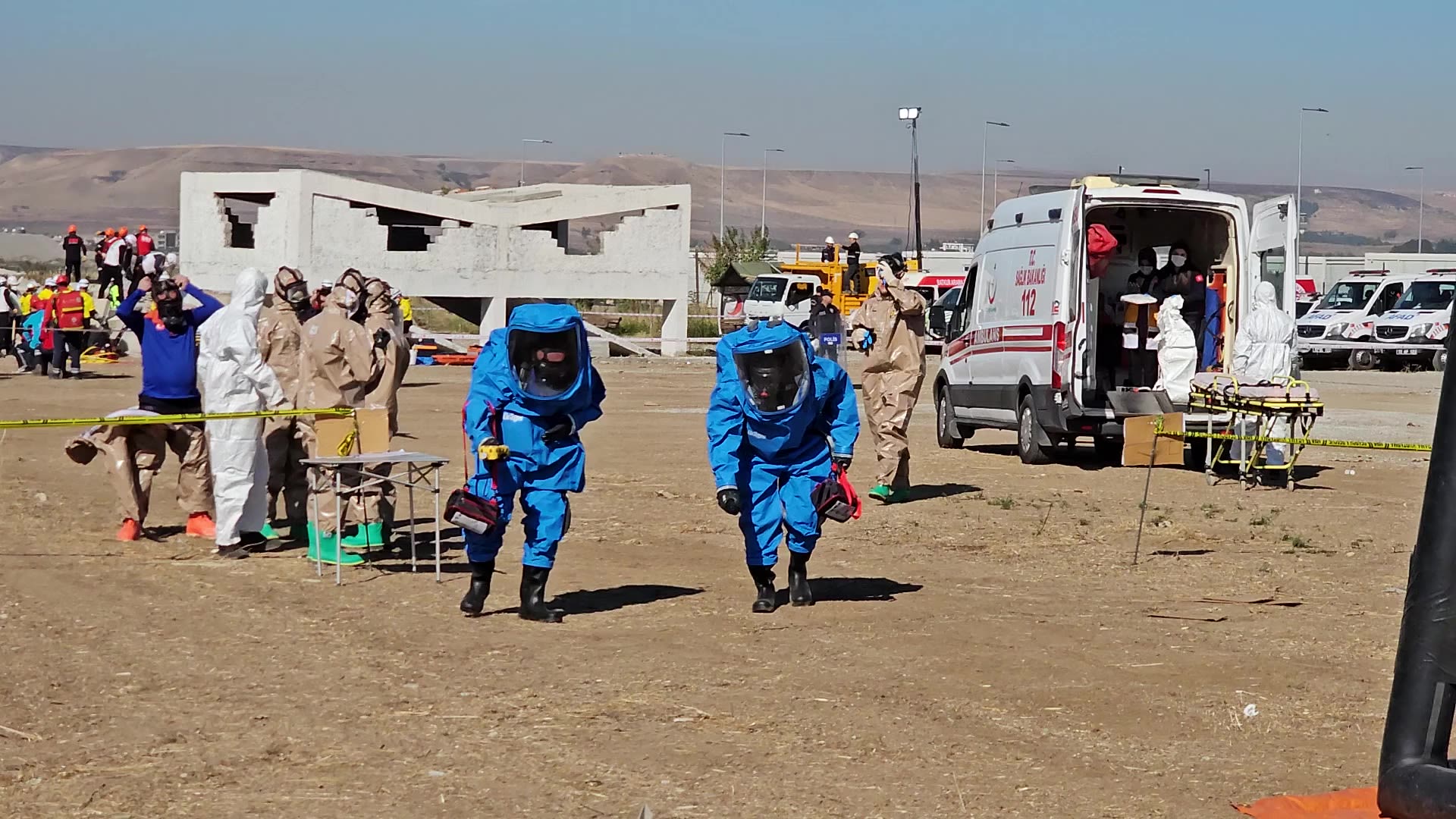
For decades, countries have focused on responding to disasters after they occur.
Yet preparedness is not only about managing emergencies, but also about protecting development gains.
Emergency operations centers, early warning systems, trained responders, clear decision-making protocols, and crisis financing arrangements help governments keep essential services running, shorten disruptions, and support faster recovery.
This enables businesses to reopen sooner, preserves jobs and livelihoods, and strengthens confidence in a country’s ability to withstand future shocks.
The World Bank Group and the Global Facility for Disaster Reduction and Recovery (GFDRR) are working with client governments to transform these patterns.
The aim is to put institutions, systems, and financing in place beforehand — so that when the next crisis hits, the mechanisms to respond are already known, tested, and ready to be triggered, rather than pieced together as a reactive, ad hoc measure when time is of the essence.
That shift, to motivate spending on preparedness measures during "blue sky" times, sits at the center of GFDRR’s emergency preparedness and response thematic area.
Protecting Jobs with Proactive Preparedness.
Preparing for shocks before they strike protects vital economic sectors and the jobs they support. This proactive approach ensures local economies withstand the storm rather than seeing community livelihoods erased overnight.
Building the System,
not Just the Response
A five-part diagnostic framework helps governments identify exactly where their emergency systems need reinforcement.
Financing alone does not save lives during disasters. Financing has to reach people who are trained and mandated to act, facilities built to withstand the shock, equipment that keeps working when it is needed most, and information systems that tell responders where to go and inform at-risk populations what to expect next.
GFDRR Emergency Preparedness and Response (EP&R)
Diagnostic Framework
When disaster strikes, modern resilience isn’t just about having individual resources—it’s about how seamlessly a nation's legal and institutional architecture connects them into a unified system.
GFDRR's approach to Emergency Preparedness and Response (EP&R) is built around that understanding. Its diagnostic framework assesses five core operational and institutional components of a functional EP&R system across all administrative levels:
Legal & Institutional Accountabilities
Mandates, legislation, and organizational frameworks that define formal responsibilities and authority across agencies.
Personnel
Trained staff with clear mandates, accountabilities, and well-defined roles across government levels.
Facilities
Command centers, logistics hubs, and resilient shelters built to function under crisis stress.
Equipment
Redundant communication systems and response tools that stay operational when routine systems fail.
Information Management
Data streams, multi-hazard mapping, and early warning systems informing decisions before and during crises.
The Core Binding Mechanism
A fifth component, legal and institutional foundations, holds the other four together. It establishes the mandates, accountabilities, and coordination arrangements — between national ministries, subnational authorities, municipal emergency teams, NGOs, and the private sector — ensuring investments function cohesively as a unified national architecture rather than siloed efforts.
GFDRR Emergency Preparedness and Response (EP&R)
Diagnostic Framework
When disaster strikes, modern resilience isn’t just about having individual resources—it’s about how seamlessly a nation's legal and institutional architecture connects them into a unified system.
GFDRR's approach to Emergency Preparedness and Response (EP&R) is built around that understanding. Its diagnostic framework assesses five core operational and institutional components of a functional EP&R system across all administrative levels:
Legal & Institutional Accountabilities
Mandates, legislation, and organizational frameworks that define formal responsibilities and authority across agencies.
Personnel
Trained staff with clear mandates, accountabilities, and well-defined roles across government levels.
Facilities
Command centers, logistics hubs, and resilient shelters built to function under crisis stress.
Equipment
Redundant communication systems and response tools that stay operational when routine systems fail.
Information Management
Data streams, multi-hazard mapping, and early warning systems informing decisions before and during crises.
The Core Binding Mechanism
A fifth component, legal and institutional foundations, holds the other four together.
It establishes the mandates, accountabilities, and coordination arrangements — between national ministries, subnational authorities, municipal emergency teams, NGOs, and the private sector — ensuring investments function cohesively as a unified national architecture rather than siloed efforts.
To ensure these five components function as a unified system rather than disconnected investments, governments must systematically evaluate their gaps.
To help governments assess these components and prioritize investment accordingly, GFDRR applies three complementary diagnostic tools. Each tool answers a different question, at a different level of detail. Together, they turn a general sense of vulnerability into a concrete, financeable plan.
Lessons Learned Exercise (LLE)
The Lessons Learned Exercise (LLE) is an innovative process that helps governments and partners assess and improve their Emergency Preparedness and Response (EP&R) systems. By capturing lessons from previous crises, the LLE helps countries build more resilient systems, improve coordination, and strengthen institutional frameworks, ensuring better responses to future emergencies.
Explore the LLE User Guide & Methodology →Case Study: Nigeria
Following catastrophic flooding in 2022, Nigeria conducted an extensive Lessons Learned Exercise reviewing emergency systems across 18 states and the Federal Capital Territory. Through multi-agency workshops and tabletop simulations, the exercise pinpointed vital operational gaps, recommending an integrated legal framework to clarify national (NEMA) and state (SEMA) mandates, backed by real-time information systems, dedicated crisis financing, and community-centered early warnings.
Explore the Nigeria Flood Response Case Study →Ready2Respond (R2R) Diagnostic
The Ready2Respond (R2R) Diagnostic goes further, assessing roughly 360 data points across all five components to produce a costed, prioritized investment plan for project preparation or long-term strategic planning. When a quicker EP&R snapshot is needed, the tool can be adapted into a Rapid Preparedness Assessment covering a focused 30 to 90 data points. To date, the R2R framework has been applied in more than 20 countries across five regions.
Read the Ready2Respond Diagnostic Guidelines →Case Study: Cabo Verde
To guide future resilience investments, Cabo Verde conducted a comprehensive Ready2Respond (R2R) assessment. The diagnostic mapped the country’s entire EP&R system, pinpointing specific gaps in inter-agency coordination and emergency relief operations. This strong analytical foundation directly informed a new World Bank operation and established clear investment priorities for development partners.
Explore the Cabo Verde R2R Diagnostic Case Study →Crisis Preparedness Gap Analysis (CPGA)
The Crisis Preparedness Gap Analysis (CPGA) takes a higher-level, cross-sectoral view of a country's readiness for a wider range of shocks — natural hazards, pandemics, and food insecurity among them — and has supported 15 countries across six regions.
Download the CPGA Framework & Methodology Note →Case Study: Tajikistan
Timed to coincide with the launch of Country Partnership Framework consultations, the CPGA provided a cross-sectoral assessment of Tajikistan's preparedness. By evaluating disaster risk financing, scalable social protection, and institutional coordination, the analysis offered a vital evidence base for prioritizing reforms and exploring contingent financing instruments like a Cat-DDO.
Explore the Tajikistan Crisis Preparedness Case Study →Emergency Operations Centers (EOCs)
GFDRR also offers support on specific EP&R topics, including how to better understand the operational roles of Emergency Operations Centers (EOCs) and their importance in orchestrating disaster management and preparedness. Face-to-face workshops and simulations on EOC design and operationalization help establish clear roles and ensure effective coordination with government and non-government stakeholders.
Access the EOC Design & Operationalization E-Learning Module →Case Study: Himeji, Japan
During the 2024 Understanding Risk Forum (UR24) in Himeji, Japan, GFDRR convened global experts to share practical lessons on strengthening emergency preparedness. Through hands-on workshops and site visits, participants explored how well-designed EOCs, community early-warning systems, and continuous training transform disaster response from reactive to proactive, offering a powerful example of resilience in action.
Explore the Japan Emergency Operations Case Study →Readiness in Action
A Global Overview of Emergency Preparedness & Response (EP&R) Exercises
The World Bank and GFDRR are working with client governments to put financing, institutions, and systems in place beforehand. Rather than waiting for a shock to determine how a response will be organized, the aim is to ensure mechanisms are known, tested, and ready to be triggered.
Click a country marker or use the filters and regional buttons to explore interventions.
Financing Readiness
Before the Shock
Pre-arranged financing instruments give governments the liquidity to act within days of a disaster, not months.
When a major flood strikes, an earthquake hits, or a severe drought alert is triggered, timing dictates the trajectory of recovery.
Instead of scrambling to reallocate domestic budgets or waiting on slow-moving international appeals, finance ministries can immediately activate instruments negotiated months or years in advance—releasing vital liquidity automatically within days based on pre-agreed hazard thresholds.
This immediate influx of capital is critical for preserving local economies and sustaining employment.
By guaranteeing that emergency funds are instantly available to stabilize supply chains, repair critical infrastructure, and keep small businesses afloat, governments can ensure that a temporary climate shock does not result in permanent, massive job losses.
This is the logic behind the World Bank Group's Crisis Preparedness and Response Toolkit (CPRT), one of the main vehicles for delivering the crisis-preparedness commitments.
The expanded toolkit builds on existing World Bank Group crisis response tools, filling gaps based on lessons learned from previous crisis response and helping ensure comprehensive protection for countries in times of need. Rather than a single instrument, the CPRT is a set of complementary financing tools that governments can draw on depending on the type and scale of a crisis they face:
Crisis Preparedness and Response Toolkit (CPRT)
Hover over the cards below to learn more.
More Flexible Funding Reallocation: The Rapid Response Option (RRO)
The Rapid Response Option (RRO) allows a government to repurpose up to 10% of its undisbursed, uncommitted World Bank funds toward an eligible crisis.
This ensures swift access to financing within the first few days of a disaster, enabling countries to provide food, water, and medicine to save lives.
For more information →Contingent Emergency Response (CERP & CERC)
Designed specifically to channel the RRO once a crisis is declared, it functions either as a standalone project prepared in advance (CERP) or embedded within an existing investment project (CERC).
Burundi and Comoros conduct simulations to test activation procedures, ensuring funds unlock instantly when severe flooding hits.
Scaled up Access to Contingent Resources (Cat DDO)
The Development Policy Financing (DPF) Catastrophe Draw Down Option (Cat DDO) provides a pre-arranged line of credit for budget support when revenues are disrupted from shocks.
Romania secured a $500 million Cat DDO following targeted policy reforms, establishing immediate access to funds in a crisis.
For more information →Climate Resilient Debt Clauses (CRDC)
Allows eligible small states to defer principal and interest payments on their World Bank loans for up to two years following a qualifying disaster.
Barbados signed a CRDC hours before a major hurricane made landfall to instantly redirect funds to urgent recovery needs over debt repayment.
For more information →This is the logic behind the World Bank Group's Crisis Preparedness and Response Toolkit (CPRT), one of the main vehicles for delivering the crisis-preparedness commitments.
The expanded toolkit builds on existing World Bank Group crisis response tools, filling gaps based on lessons learned from previous crisis response and helping ensure comprehensive protection for countries in times of need.
Rather than a single instrument, the CPRT is a set of complementary financing tools that governments can draw on depending on the type and scale of a crisis they face:
Crisis Preparedness and Response Toolkit (CPRT)
Tap the cards below to learn more.
More Flexible Funding Reallocation: The Rapid Response Option (RRO)
The Rapid Response Option (RRO) allows a government to repurpose up to 10% of its undisbursed, uncommitted World Bank funds toward an eligible crisis.
This ensures swift access to financing within the first few days of a disaster, enabling countries to provide food, water, and medicine to save lives.
For more information →Contingent Emergency Response (CERP & CERC)
Designed specifically to channel the RRO once a crisis is declared, it functions either as a standalone project prepared in advance (CERP) or embedded within an existing investment project (CERC).
Burundi and Comoros conduct simulations to test activation procedures, ensuring funds unlock instantly when severe flooding hits.
Scaled up Access to Contingent Resources (Cat DDO)
The Development Policy Financing (DPF) Catastrophe Draw Down Option (Cat DDO) provides a pre-arranged line of credit for budget support when revenues are disrupted from shocks.
Romania secured a $500 million Cat DDO following targeted policy reforms, establishing immediate access to funds in a crisis.
For more information →Climate Resilient Debt Clauses (CRDC)
Allows eligible small states to defer principal and interest payments on their World Bank loans for up to two years following a qualifying disaster.
Barbados signed a CRDC hours before a major hurricane made landfall to instantly redirect funds to urgent recovery needs over debt repayment.
For more information →When the financing is already in place, the response is measured in days, not months.
None of these instruments works in isolation, and none is a substitute for capable institutions on the ground. What they share is a simple principle: financing decided in advance, before a crisis, moves faster and further than financing negotiated during one — and it gives governments room to act on their own terms rather than on a donor's timeline, ultimately safeguarding both lives and livelihoods.
From Reactive to Resilient

Preparedness is, above all, a more efficient use of scarce public resources.
Resources committed in advance—to instruments and institutions that have already been tested—go much further than money raised in the uncertain aftermath of a disaster.
Putting response plans, supply chains, and coordination mechanisms in place before a crisis hits, keeps a manageable shock from spiraling into an emergency.
When emergency protocols and frontline capacities are established in advance, communities recover faster critical services remain operational, and households avoid falling into prolonged vulnerability.
GFDRR helps connect the two sides of preparedness: the financing that makes rapid response possible, and the institutions, people, and systems needed to put that financing to work.
Over the past decade, GFDRR has provided nearly $40 million through 69 grants to support Contingent Emergency Response (CERC and CERP), helping countries put in place the technical and operational foundations needed to access and use emergency financing when it matters most.
GFDRR also helps countries prepare for El Niño impacts, grounded in analytical rigor.
Information is key. GFDRR combines preparedness support with robust risk analytics to help governments understand the scope of the risks they face as hazards and climate events evolve.
With strong 2026-2027 El Niño forecasts, GFDRR is working to help governments translate the science into preparedness action and make decisions under deep uncertainty. By assessing the patterns and impacts of past events and the global reach of the El Niño-Southern Oscillation (ENSO) or the entire climate system, in interaction with other systems, we estimate potential upcoming impacts from floods, drought, extreme heat and tropical cyclones.
For example, the Latin America and Caribbean region could bear the brunt of forecasted El Niño impacts. A deeper analysis points to an average US$60.2 billion in damage and losses, or 0.77% of regional GDP, with flooding accounting for 60% of the total.
Investing in preparedness now positions governments to respond faster and more effectively when shocks arrive.
As the World Bank delivers on its broader crisis preparedness commitments, extending this combination of financing and institutional readiness remains a central priority.
This effort is expanding globally—spanning activities from Bolivia to Guinea-Bissau, and Comoros to Nigeria. The evidence highlighted throughout this story, from Burundi’s tabletop simulations to to critical EP&R investments in Romania, Pakistan or Haiti, shows what is possible when readiness is embedded into everyday national planning.
No country can prevent every hazard. But with the right systems in place, a hazard does not have to become a disaster.
The measure of preparedness is simple: when the next shock comes, countries should be activating systems already built—not scrambling to create them for the first time.
This is also central to the World Bank Group’s broader push to build resilience into development—protecting lives, jobs, essential services, and hard-won development gains from shocks.
Additional Emergency Preparedness & Response Resources
Immersive Story Series Lead: Erika Vargas
Designed and Developed by: Yann Kerblat and Erika Vargas
Contributors: Hugo Wesley and Mary Boyer
Video and Photo credits: World Bank Group unless otherwise noted.